A Faster, Cleaner View of Your Whole Operating Life on the Web
Aug 18, 2025 · Steve Berry, N1EZ

Before anyone misreads the title of this post: we did not build a logbook to compete with the one you use. I will keep saying that, because it is the most important thing to understand about DxQSO. What we built is a place to see your one living record — the unified result of every logbook and source you already use — in your browser, current to the second. This summer we made that web experience much faster and far easier to live in.
Every source, unified, on one screen
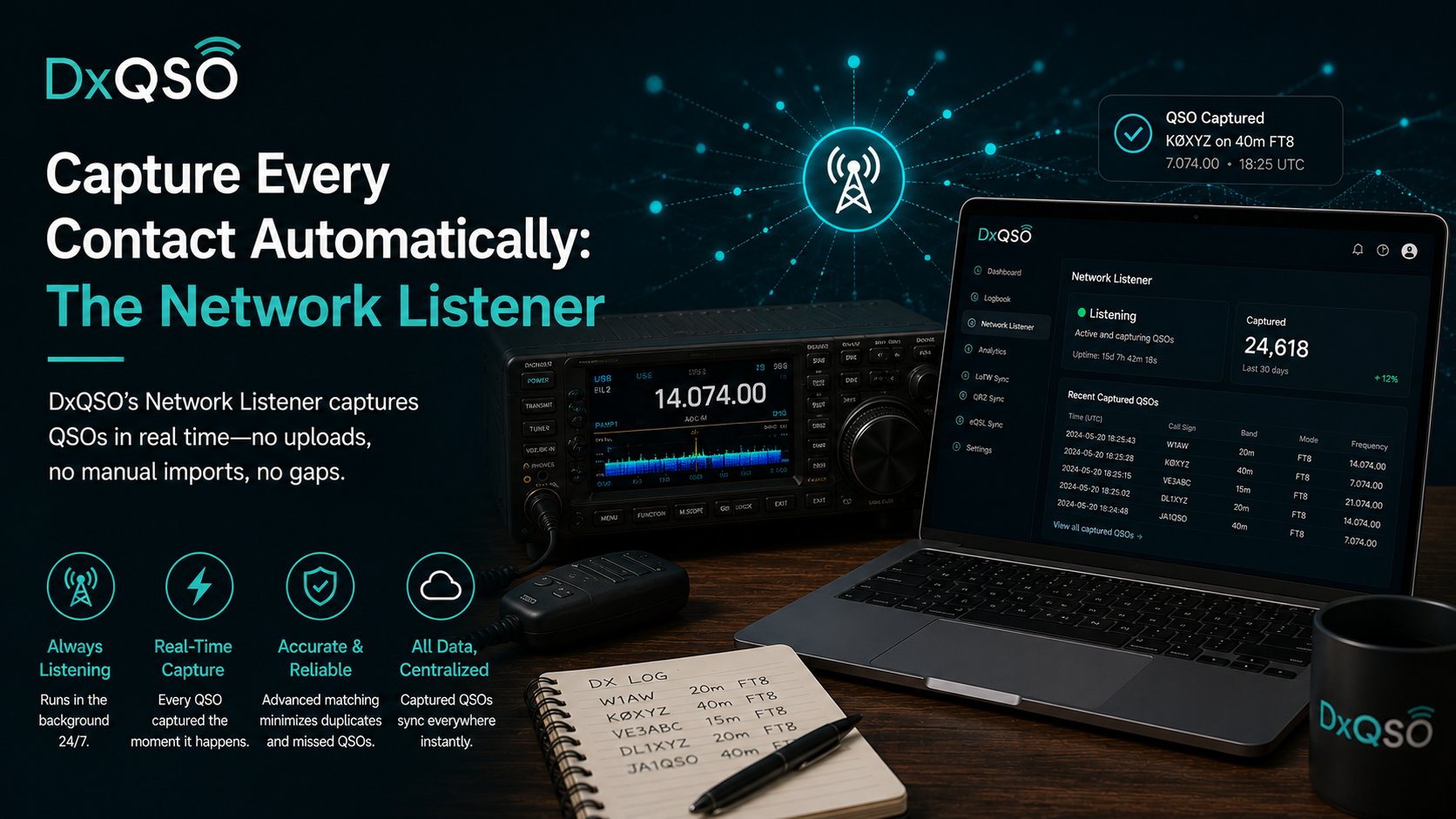
Here is what the web view actually is. Your contacts come from wherever you make them: a home-shack program, a contest logger, a POTA app, QRZ.com, direct LoTW® activity. DxQSO consolidates all of it into a single, always-current operating record. The redesigned web logbook brings that consolidated record to a full screen with room to breathe — quick search, direct filtering by band, mode, date, or station, and large logbooks that load and scroll without the lag that creeps in when a tool was not built for serious volume.
We also leaned into clarity. Confirmed QSLs are easy to spot at a glance. Your stations, your tags, and the sources feeding your record are all where you expect them. The goal was never a flashier logbook — it was a clear window onto everything you do on the air, no matter how many programs you spread it across.
What you can actually do with it
A window is only useful if you can act through it, so here is what the redesigned web logbook actually gives you. Search that keeps up as you type, across a record of any size. Filtering by band, mode, date range, or station, so you can pull “every 20m FT8 contact from last month” or “everything from the June contest station” in a second. A clear read on which contacts are confirmed and which are still outstanding, so award progress is something you can see rather than something you have to reconstruct. And when you need the data elsewhere, a clean export in the format your target application expects — because a repository that will not give your data back is not a repository you should trust.
It also handles the messy reality of how people actually operate. Virtual stations let you keep a contest weekend, a POTA activation, and your home-shack operating organized within one record instead of scattered across separate logbooks. Tags let you mark contacts for whatever matters to you — a special event, a particular antenna, a friend’s station. None of this asks you to change where you log. It just means that once your contacts arrive, from wherever they came, you can finally see and slice all of them in one place.
Built on the real-time engine
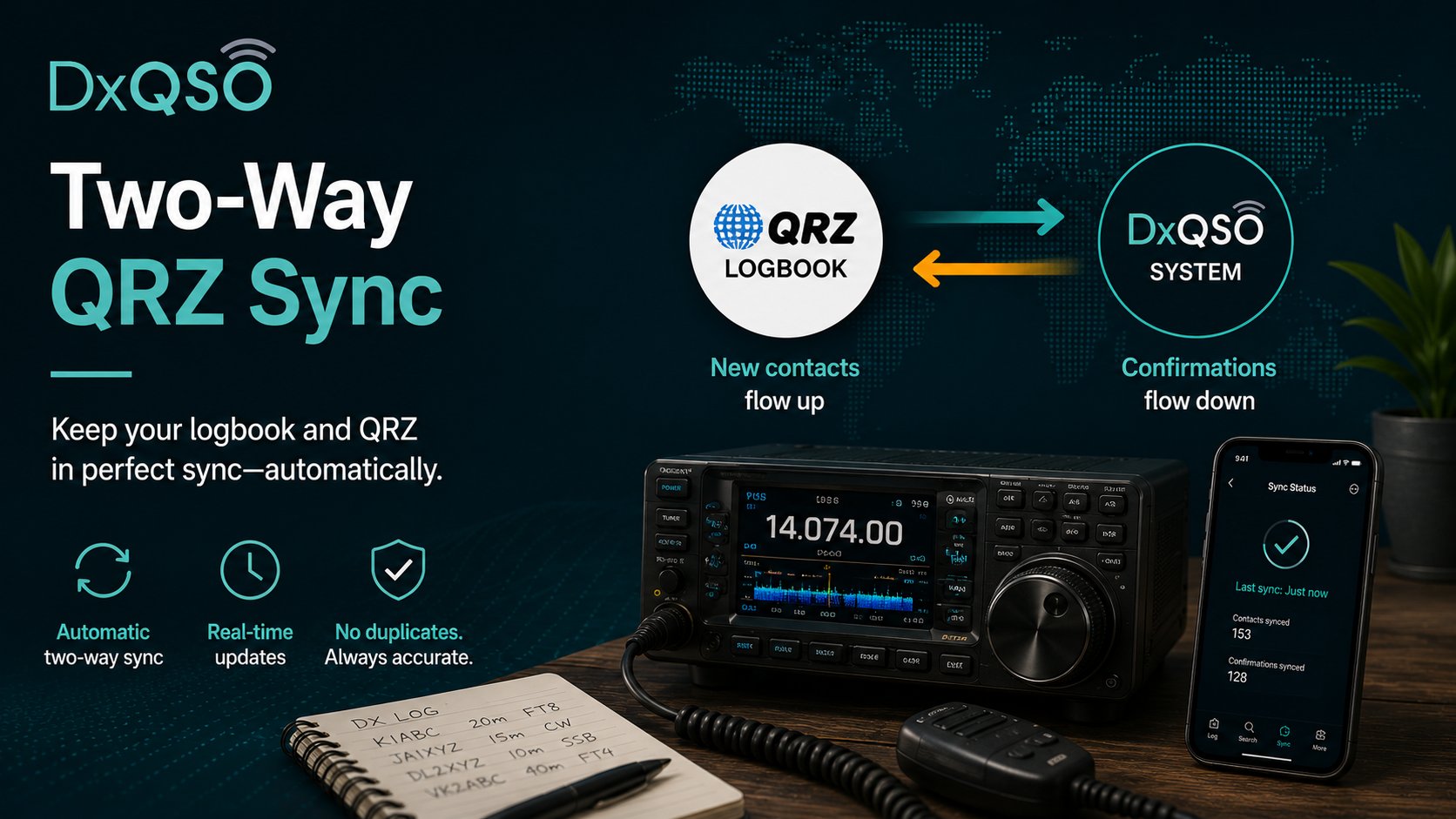
This redesign rides on the sync engine we rebuilt earlier this summer. That is why the web view feels immediate even on a record with tens of thousands of contacts: it asks for what changed, holds the rest intelligently, and renders without making you wait. The same engine is what lets your phone show the same record, just as current, at the same moment.
Why a browser view still matters
Some people ask why we bother with a full web logbook when there is a mobile app. The answer is that they are two windows onto the same record, and each is right for a different moment. The phone is what buzzes in your pocket when a confirmation lands and what you glance at between contacts. The browser is where you sit down with a large screen, a keyboard, and real estate to review a contest weekend, audit your award progress, plan what to chase next, or clean up a batch of imports.
The record is identical; only the surface changes. Forcing everything through a phone-sized screen would be a compromise, and forcing you back to a single desktop to see your own log would defeat the entire point of DxQSO. So we invested in both, deliberately, and tied them to the same live record so that whichever one you happen to reach for shows you the same truth at the same moment.
Anywhere means anywhere
One of the founding ideas of DxQSO is that your shack should not be a place — it should be wherever you are. A strong mobile experience and a strong web experience are two faces of one record. Log a contest weekend in your dedicated logger, glance at where things stand from your phone at lunch, then sit down at the desk that night and review the whole thing on a big screen. Same record, no exports, no reconciling, no second copy to keep straight.
Open it up at dxqso.net and spend a few minutes in the new web logbook. If you run a single home station, this is your operating life made portable and clear. If you operate across half a dozen tools, it is the one place all of it finally lines up — the foundation that the alerts, achievements, and collaboration features are all built to act on. The window got a lot better this summer; what you can see through it is your whole hobby.